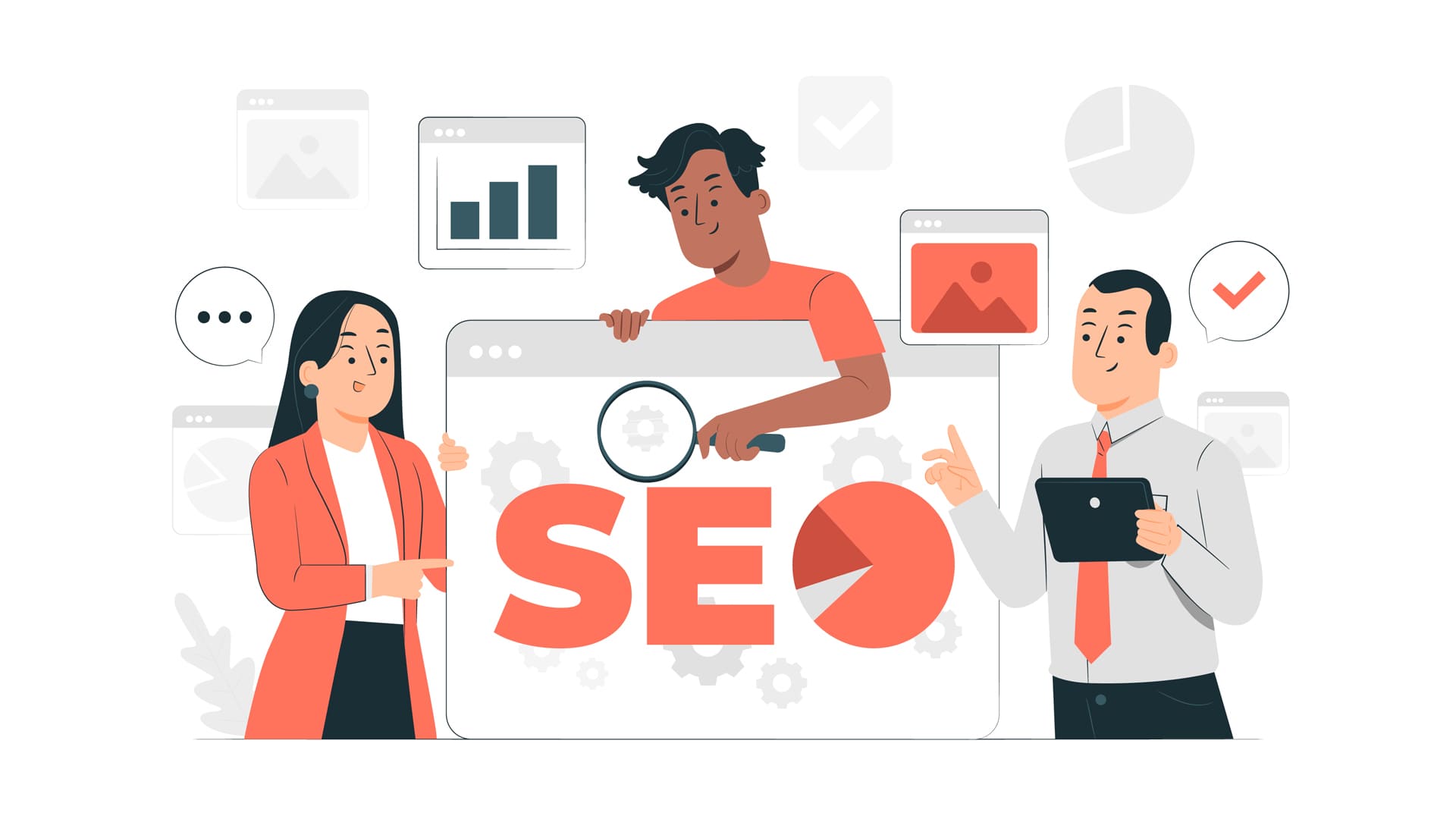
Search engine optimization, or SEO, is a term. It is simply the process of making changes to your website to make it more visible when users search for goods or services associated with your company on Google, Bing, and other search engines. Your chances of gaining attention and luring both current and potential clients to your business increase with the prominence your pages have in search results. To enhance the visibility and positioning of websites in organic search results, a series of procedures called SEO is used. A solid SEO plan is necessary for increasing both the quality and volume of visitors to your website because organic search is the most popular method for people to find and access online information.
Let's divide our definition into three parts to better understand the value of SEO:
Organic search results: The organic results (SERP) that a search engine has concluded are most pertinent to the user's query. Many SERPs are dominated by advertisements (in this case, PPC or pay-per-click ads). When compared to these adverts, organic search results are different since they are ranked using the search engine's organic algorithms rather than advertiser bids. Your page cannot be paid to appear higher in organic search results.
Quality of traffic: How pertinent your website's content is to the user and their search query. You can get all the visits you want, but if people arrive on your site believing you to be an Apple computer resource when in reality you are just a farmer selling apples, they're likely to depart without making a purchase. Only people who are interested in the goods, data, or other resources your site provides constitute high-quality traffic. The search engine's efforts to match a user's search intent to the web pages presented in the SERP are taken advantage of by high-quality SEO.
Quantity of traffic: The number of visitors who arrive at your website from organic search results. It's crucial to employ your SEO strategy to rank relevant pages as high as you can because users are far more likely to click on search results that are close to the top of the SERP. Your chances of seeing an increase in worthwhile conversions improve as you draw in more high-quality visitors to your website.
Crawlers, often known as bots or spiders, are used by search engines like Google and Bing to collect data on all the content they can locate online. Starting from a well-known web page, the crawler tracks both internal links to pages on that particular site and external links to pages on other sites. The crawler can grasp what each website is about and how it is semantically connected to all the other pages in the search engine's enormous database, called an index, thanks to the content on those pages and the context of the connections it followed.
The search engine utilizes sophisticated algorithms to compile a list of results it considers to be the most accurate and helpful for a user's query after they enter it or voice it into the search box. Websites with a lot of text, news stories, pictures, videos, listings for nearby businesses, and other more specialized sorts of information can all be found among these organic results.
SEO works in 2 factors:
Crawling is the process used by search engines to find and find again both new and old web pages. Internal linking and backlinking are essential to SEO because crawlers, also known as spiders, employ links to find and re-find material.
Indexing is the process through which search engines save content from the web for later delivery through search results. After crawling, indexing takes place. The majority of pages will be indexed by search engines, but spammy, blocked, or duplicate pages are rarely included.
Because keywords inform search engines about the subject of a page, keyword research is essential to SEO. Because of this, keywords are frequently used in title tags, header tags, and other parts of the content. The secret is to develop your research and keyword integration skills, though. Keyword density is essential for your page to rank correctly in the search results, regardless of whether you add a new page to your website or create a blog post. To make sure you're striking a balance between using a term frequently enough to rank but not so frequently that it damages your ranking, it's important to keep an eye on keyword density, also known as keyword frequency.
What is the process of search engine optimization? full of content! One of the main elements of SEO is content. You must understand how to develop, generate, and promote SEO content if you want to use SEO to drive visitors and money to your website. Content for SEO is written to appear in search results and is therefore optimized for both people and search engines. Because this type of content attracts quality consumers and traffic to websites, businesses write SEO content.
Another important SEO aspect is header tags, which comprise title tags, meta descriptions, and more. Learn how to build header tags that highlight the relevancy and utility of your content and make SEO work for your company. Your headlines are noticeable on your sites and direct people to the portions that interest them the most. Depending on how you want to style your material and divide it up, you can use several header tags on your page. The hierarchy of header tags ranges from H1 to H6. To maintain your page's search engine optimization (SEO) friendliness, you must adhere to this hierarchy. You can keep your pages organized and simple to read by adhering to the H1 to an H6 hierarchy structure.
On-page, off-page, and technical SEO are all used in SEO. Technical SEO includes web design heavily and necessitates cooperation from developers and designers. Therefore, it's crucial to educate yourself so that you can explain SEO best practices to designers and engineers. Google and its algorithms do not rank all website structures equally. Your website's navigation must be user-friendly and point users to pertinent material throughout your site for it to be "SEO-friendly." The foundational elements of website architecture support functionality, which is the core value of SEO. It can increase important KPIs like the click-through rate and conversion rate through simplified crawls and simple navigation.
A page's content can be more effectively communicated by using structured data. Coding called schema markup enables you to make improved descriptions that show up in search results. You may optimize your website so that search engines can read it and return more detailed search results for users by using the schema.org markup language. More than 10 million websites are listed on Schema.org as using the vocabulary to annotate their emails and web pages. Search engines like Google want to give their users useful, pertinent information. Search engines must be aware of what is on your website to achieve that.
The speed at which content loads on a single page is known as page speed. In some circumstances, developers will use terms like "page load time" or "time to first byte" to describe how quickly a web browser like Google Chrome receives the first byte of data from your web server. Page load time measures how long it takes for a page to display all of its content. If you are familiar with search engine optimization (SEO), you have probably overheard a discussion about how important page speed is to SEO. Fast websites are preferred by users and search engines. That is why page speed is considered a ranking factor by search engines like Google. The user experience can be enhanced by search engines by incorporating page speed as a ranking element.
We provide major services such as: Apartments | Plots | Automotive | Electronics Repair | Restaurants/Fast Foods | Health Care / Doctors | Advocates/Legal Consultants | Architects/Interior Designers | Industrial Products | Computer Repairs and IT Services | Other | and much more.
Octal Space provides a variety of services to help you expand your reach and connect with millions of shoppers, whether you're a major company, a small business, or a marketing agency. We provide a successful lead-generating approach and a marketing strategy that is ROI-oriented.


Ooty Tamil Nadu India
Call Us 9600255874
support@octalspace.com
